Delhi Police Detain CJP Founder Dipke as Flag March Triggers Fresh Political Row
By: Javid Amin | 16 October 2026
New Delhi: The Cockroach Janta Party’s (CJP) planned ‘Lehra Do Tiranga’ march turned into a day of police detentions and scattered demonstrations across central Delhi on Friday, after authorities moved to prevent protesters from gathering at Central Park in Connaught Place.
CJP founder Abhijeet Dipke and All India Students’ Association (AISA) president Neha Bora were among approximately 150 people reportedly detained at Connaught Place, Janpath and Mandi House as police enforced prohibitory orders ahead of the proposed demonstration. The march had been announced for 5 pm, with organisers calling on supporters to carry the national flag and demand accountability over alleged irregularities in electoral-roll revision.
Dipke was detained shortly after leaving the residence where he was staying in Delhi. In a video circulated by the CJP, he questioned the legal basis for the action, asking: “I’m alone, how is this a violation?” Police personnel reportedly told him that preventive action was being taken before placing him in a police vehicle.
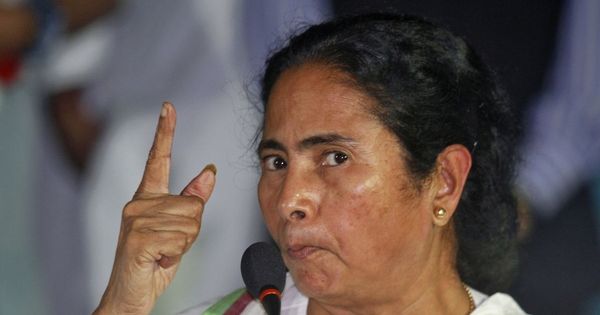
The detentions did not prevent all demonstrations. Supporters and members of student organisations staged flash protests at different locations, carrying the Tricolour and raising slogans. The developments intensified a dispute that had already drawn the Delhi High Court’s attention and prompted criticism from political figures, including West Bengal Chief Minister Mamata Banerjee, according to the supplied reports.
Dipke Detained Before Reaching Connaught Place
The confrontation escalated after Delhi Police had earlier served Dipke a notice asking him not to proceed with the planned march at Central Park.
Police cited prohibitory orders under Section 163 of the Bharatiya Nagarik Suraksha Sanhita (BNSS), along with concerns about public safety, traffic movement and disruption to businesses in Connaught Place.
Dipke nevertheless left his residence carrying the national flag and headed towards the proposed protest site. According to video footage reported by Hindustan Times, he questioned how he could be accused of violating an order while walking alone, with journalists nearby.
Police personnel maintained that preventive action was being taken. Dipke was subsequently taken into custody before he could reach Central Park.
The exchange has become a focal point of the controversy. For the CJP, it raises questions about whether restrictions intended to regulate a public gathering were applied before the announced event began. For police, the relevant issue was the enforcement of prohibitory orders and the prevention of an unauthorised assembly.
The available reports establish that Dipke was detained and that police cited preventive action. They do not, by themselves, settle the legal question of whether the specific circumstances justified the action.
Neha Bora Also Detained as Student Groups Move Towards CP
Neha Bora, president of the All India Students’ Association, was also detained while heading towards Connaught Place.
Bora had announced a march from Mandi House, joining a wider mobilisation involving student and left-wing organisations. Police intercepted the demonstrators as they moved towards the central business district.
Reports also identified left-wing leader Dipankar Bhattacharya among those caught up in the police action. Detentions and confrontations were reported around Mandi House and Barakhamba Road, while demonstrators attempted to move towards the proposed gathering point.
The reported total of around 150 detainees covered several locations, rather than only the immediate vicinity of Central Park.
The action broadened the dispute beyond the CJP leadership. Student groups and other activists had joined the mobilisation in support of the right to protest and to press demands linked to the controversy over electoral rolls.
The authorities’ response, meanwhile, reflected their effort to prevent a large gathering from forming at a venue where the planned event had not received permission.
Flash Protests Continue Despite the Security Restrictions
Although police detained several organisers and demonstrators, protesters continued to gather at different points in central Delhi.
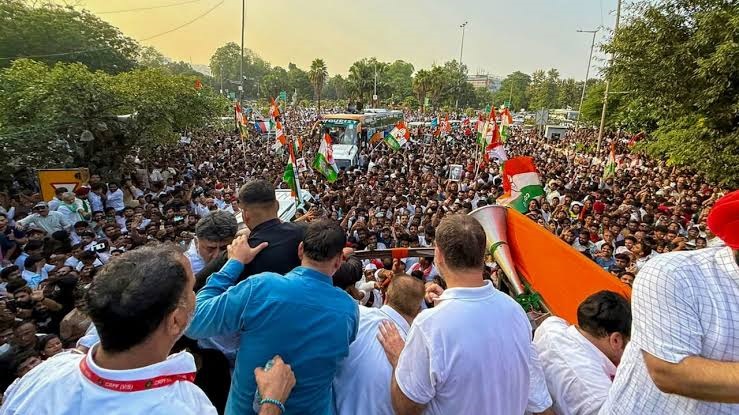
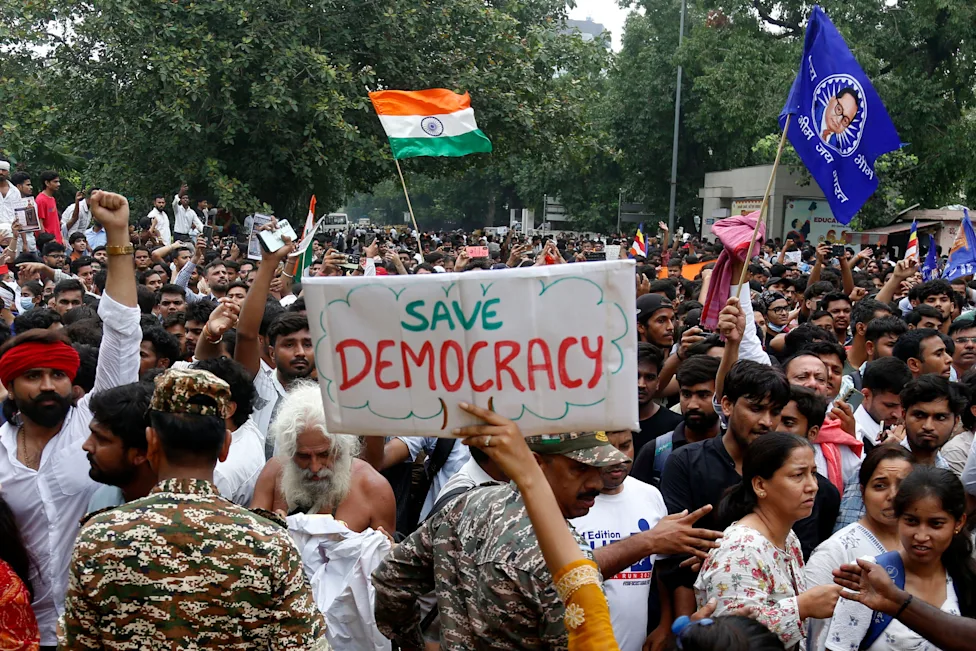
Reports from Friday evening described hundreds of CJP supporters and members of student organisations carrying the national flag through parts of Connaught Place and Mandi House. Some participants raised slogans, sang the national anthem and dispersed before regrouping elsewhere.
Minor altercations were reported as police attempted to disperse groups and maintain the restrictions.
The pattern of short-lived gatherings complicated efforts to contain the demonstrations within one location. Instead of a single march beginning at Central Park, the protest activity became dispersed across several parts of the capital.
The distinction matters. The proposed event at Central Park and the subsequent gatherings elsewhere were related, but they were not necessarily one continuous march under a single leadership.
The available reporting confirms that protest activity continued despite the detentions. The full extent of participation and the final number of people taken into custody would require confirmation from the authorities.
Why Was the ‘Lehra Do Tiranga’ March Called?
The CJP announced the march after the detention and judicial custody of senior party leaders Saurav Das and Ashutosh Ranka following earlier demonstrations linked to demands for Chief Election Commissioner Gyanesh Kumar’s resignation.
The wider campaign centres on allegations of irregularities in the Special Intensive Revision (SIR) of electoral rolls. Critics have questioned the removal of names from voter lists and raised concerns about the possible exclusion of eligible voters.
The Election Commission has maintained that electoral-roll revisions involve verification and the removal of entries that are no longer valid, including those relating to deceased, relocated or untraceable voters. Critics dispute aspects of the process and have called for greater transparency and accountability.
Those competing positions remain central to the political controversy. Allegations of deliberate manipulation should not be treated as established findings without supporting evidence.
For the CJP, the Tiranga march was intended to combine support for its detained leaders with a broader demand for electoral accountability. The national flag became the central symbol of the mobilisation, with Dipke and other organisers presenting the gathering as a peaceful exercise of democratic rights.
Central Park Closure and Section 163 BNSS
The protest was complicated by the closure of Central Park in Connaught Place on October 16 and 17.
The New Delhi Municipal Council announced the closure citing administrative reasons. Although the timing coincided with the proposed march, the closure notice itself did not establish that the decision was taken solely to prevent the demonstration.
Delhi Police separately cited prohibitory orders under Section 163 of the BNSS. The provision allows an authorised magistrate to issue urgent orders in specified circumstances to prevent danger, obstruction or disturbances of public tranquillity.
Such orders can restrict assemblies or particular conduct within their defined geographical and temporal scope. Their legal effect depends on the terms of the specific order and the circumstances in which it is enforced.
The police had indicated that a small group of people might be permitted to gather at an alternative location to wave the national flag and sing the national anthem. However, that possibility did not amount to permission for a mass march at Central Park.
The distinction between a small permitted gathering and a larger unauthorised assembly became central to the day’s confrontation.
Delhi High Court Had Declined to Stop the Protest
The dispute had already reached the Delhi High Court before Friday’s events.
On October 15, the court declined to issue an order restraining the CJP from holding its proposed protest. Delhi Police assured the court that it would take the necessary legal measures to regulate the gathering and maintain public order.
The decision did not automatically grant organisers unrestricted access to Central Park or remove the need to comply with applicable restrictions.
It did, however, place responsibility on the authorities to manage the situation within the law. The subsequent detentions have therefore raised fresh questions about how the court proceedings, prohibitory orders and police enforcement interacted on the ground.
A refusal to stop a proposed protest is not the same as a blanket authorisation for every location, route or form of assembly. Equally, the existence of restrictions does not by itself resolve whether each individual detention was justified.
A complete assessment would require the relevant orders, the grounds recorded for individual detentions and any subsequent judicial review.
Mamata Banerjee Questions the Police Action
West Bengal Chief Minister Mamata Banerjee also questioned the police action, according to the reports supplied with the latest update.
Her reaction brought the dispute into the wider political debate over the handling of demonstrations and the limits placed on public dissent.
The episode has attracted attention beyond the CJP because it involves a highly visible public symbol, an electoral controversy and a police operation carried out ahead of a scheduled demonstration.
Political criticism of the detentions, however, should be distinguished from the legal questions surrounding the orders and the grounds for preventive action. Those questions depend on the applicable law and the specific circumstances of each case.
Heavy Security Across Central Delhi
Authorities had prepared for a significant mobilisation, with security arrangements covering Connaught Place, Rajiv Chowk, Central Park, nearby metro stations and other sensitive locations.
The Indian Express reported that more than 25,000 police and paramilitary personnel were deployed ahead of the proposed march, while other reports gave different estimates of the security deployment.
Central Park was closed for two days, and barricades were used to control access to the area. Police also issued warnings against gathering in violation of the prohibitory orders.
The security operation reflected concerns about the size of the proposed gathering and its possible effect on traffic and businesses in one of Delhi’s busiest commercial districts.
However, the large deployment also became part of the political debate, with critics questioning whether such measures were proportionate to a demonstration publicly presented by its organisers as a peaceful flag march.
That question cannot be resolved solely by the number of personnel deployed. It requires an examination of the risks authorities anticipated, the restrictions imposed and how those measures were implemented.
The Bigger Question: How Much Space Is Available for Peaceful Protest?
The day’s events have revived a broader debate about access to public spaces for demonstrations in Delhi.
The earlier restrictions affecting Jantar Mantar have been a recurring point of contention among protest organisers, who argue that limiting established protest venues makes it harder to exercise their rights in a visible and effective manner.
Authorities must also consider public safety, traffic, business activity and the rights of people who are not participating in demonstrations. The challenge is to balance those interests without imposing restrictions beyond what the law permits.
India’s Constitution protects peaceful assembly, subject to reasonable restrictions. That protection does not give organisers an unconditional right to use any location, but neither does the need to maintain public order make every restriction automatically lawful.
The CJP episode illustrates why the details matter: the wording of the prohibitory order, the availability of alternative venues, the conduct of demonstrators and the grounds for individual detentions all form part of the assessment.
What Happens After the Detentions?
The immediate questions concern the whereabouts and status of those detained, the grounds recorded by police and whether they will be released or face further legal proceedings.
Further developments may also clarify whether the authorities permitted any alternative flag-hoisting event and whether additional complaints or court proceedings follow.
The political dispute over electoral-roll revision is likely to continue independently of the immediate protest. The CJP and allied groups have linked the detentions to their broader demand for accountability from the Election Commission, while the commission’s position remains that electoral-roll verification follows established procedures.
For now, the clearest conclusion is that the planned mass gathering at Central Park did not proceed as originally envisaged. Instead, detentions and dispersed protests marked the day, with police seeking to enforce restrictions and demonstrators continuing to assert their right to assemble.
A Protest That Became a Wider Test of Democratic Rights
The ‘Lehra Do Tiranga’ episode has moved beyond a single march. Dipke’s detention, Bora’s detention and the reported detention of around 150 people across central Delhi have intensified scrutiny of the balance between public order and peaceful political expression.
The national flag gave the protest a powerful public symbol, but the central legal questions remain specific: what restrictions were in force, how they applied to each gathering and whether the police action was justified in each case.
The wider electoral-roll dispute adds another layer to the confrontation, bringing questions of voter verification and institutional accountability into the debate.
As the situation develops, the most important evidence will come from official detention records, the terms of the relevant orders, any court proceedings and confirmed accounts of what happened at each protest site.
For Delhi, the episode is another test of how authorities manage politically sensitive demonstrations in public spaces. For the CJP and allied groups, it is likely to become part of their continuing campaign over electoral transparency and the right to protest.